

AI energy saving thermostat 2026 is on the minds of homeowners and tech-savvy renters watching their electric bills climb due to unpredictable utility rates and brutal summer peaks. If you are paying for electricity on a time-of-use or variable rate plan, you already know one wrong move with your thermostat can spike costs by 30% or more.
Most smart thermostats promise lower bills, but only a few 2026 models deliver true hands-off savings by syncing to utility price signals and automatically pre-cooling your home before rates surge. The trick is finding a device with real price intelligence, reliable integrations, and a fast ROI—without comfort or privacy trade-offs.
In this guide, we cut through the hype and show you how price-aware AI thermostats in 2026 work, what to expect in real-world savings, and which models actually deliver the hands-free savings electric utilities love to rebate.
Key Takeaways
- Over 40 million U.S. homes will own a smart thermostat by late 2026 (Intertek), and real savings now come from AI models that sync with utility prices, not just programmable schedules.
- The fastest smart thermostat ROI comes from homes on Time-of-Use or variable rates, especially where summer peaks are frequent—expect device payback in 1 to 2 years under these conditions.
- Top 2026 models with electricity price sync start around $80, while premium AI-enabled thermostats (like Nest 4th Gen, Ecobee, Honeywell XS2) run $200-$250 but offer advanced pre-cooling and reliable integration features.
- Is an AI energy saving thermostat worth it in 2026?
- Market context, adoption, and pricing in 2026
- How smart thermostat electricity price sync actually works
- Pre-cooling and peak-hour strategies: How thermostats cut bills
- Which features matter most when syncing to electricity prices
- Compatibility and installation caveats (C-wire, sensors, Wi-Fi)
- Top recommended models for price-aware buyers (2026 shortlist)
- Common problems and practical fixes
- Real-world ROI worksheet—estimate your own savings
- Installation and setup checklist for accurate price sync
- FAQs: AI energy saving thermostats in 2026
Is an AI energy saving thermostat worth it in 2026? (Quick verdict)
Snippet-bait answer: An AI energy saving thermostat in 2026 is typically worth the investment for households on time-of-use (TOU) or variable rate electric plans—especially where peak pricing is frequent—since these devices learn your patterns, sync to real-time utility prices, and can lower bills automatically, with most users seeing a 1-2 year payback period.
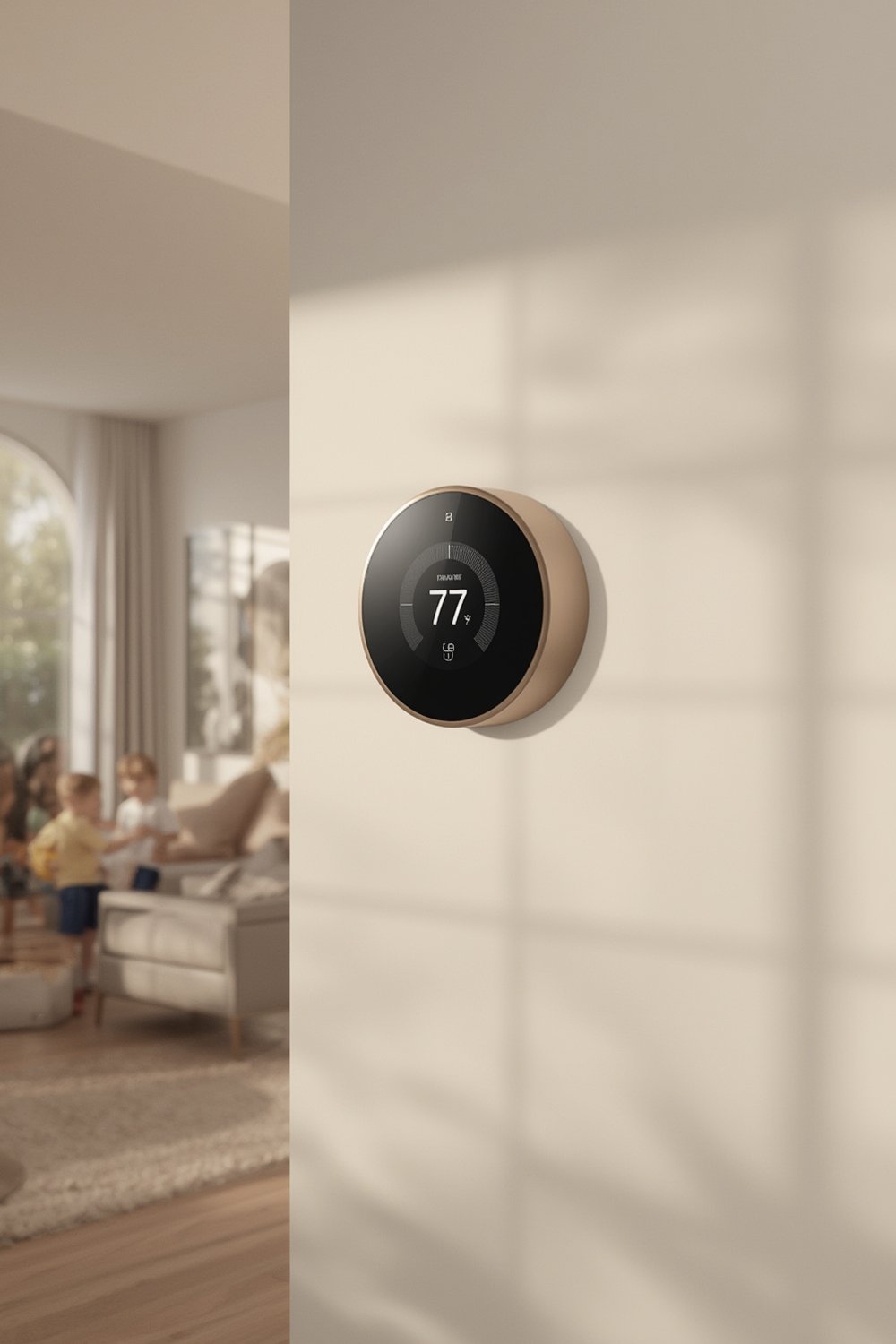
Our clear recommendation: If your electricity plan penalizes late-afternoon or evening usage, a 2026 AI thermostat can drop your cooling bills by 15-24% by pre-conditioning your home before peaks and automating schedule changes based on occupancy and weather.
Where payback is fastest: (1) Homes with TOU or demand charges that rise sharply during summer afternoons. (2) Anyone already using smart home tech who is comfortable with device setup and firmware updates—but wants “set and forget” control that adapts if rates or routines shift.
What affects ROI: Live utility integration, number of climate zones you control, local HVAC efficiency, and whether your model actually supports reliable price sync—most won’t save much unless your utility provides real-time APIs or you manually set your schedule and TOU rates. For those in flat-rate markets (or with manual-only TOU input), ROI is slower and payback stretches closer to 3 years.
Citation: Nearly 40 million U.S. homes are expected to have a smart thermostat by the end of 2026 (Intertek).
Market context, adoption, and pricing in 2026
The smart thermostat market is projected to reach nearly $7.1 billion globally in 2026, with over a third of all U.S. homes owning a smart model. Entry-level devices start at around $80 (Amazon, Meross), while premium models such as the Nest Learning Thermostat 4th Gen typically retail for $230 and up. Ecobee Essential and Honeywell Home XS2 hold the premium and mid-tier at $200–$250 (see Precedence Research).
Manufacturer competition is intense, with newer models focusing on advanced price-sync, dual-band Wi-Fi for fewer dropouts, and Matter/Thread compatibility to fix past smart home headaches. For an up-to-date look at Matter 2.0 device compatibility and how these unify your setup, see our Matter 2.0 smart home hub guide.
Smart thermostat ROI is trending upwards as utilities roll out more TOU plans and integrate with smart device APIs. The best thermostat to lower electric bill in 2026 is usually a model that automates price response, not just hands you “remote access” via an app. You can explore more pricing breakdowns in Nestology Pro’s best thermostat overview.
How smart thermostat electricity price sync actually works
Modern AI thermostats work by listening to utility rate signals (live API, Green Button/XML feeds, or manual TOU entries). When your plan shifts to a higher cost, the thermostat’s AI shifts its schedule—lowering your temperature early (pre-cooling), gradually easing off during peaks, and then restoring comfort when prices drop.
This automation blends live grid pricing with factors like current weather, occupancy sensors, and custom setpoints. Advanced integrations mean the device can adjust for renewable energy supply, or respond instantly when the grid signals a demand response event. If your utility doesn’t offer a direct integration, most products let you enter a manual TOU schedule inside your app.
Built-in AI learning helps the device “predict” your routines and optimize setpoints with minimal intervention. An example workflow:
- Detect when your utility announces tomorrow’s peak period.
- Increase cooling by 1-2 degrees at midday (when rates are low).
- Reduce A/C use during the 4-9pm high-rate window, letting your home’s thermal inertia carry you through the peak.
For deeper technical context on Green Button, integration protocols, and Matter/Thread mesh, check our Matter 2.0 upgrade guide.
Research confirms modern models ship with built-in AI learning to adjust heating and cooling based on occupancy, weather forecasts, and live energy pricing (Market US).
Pre-cooling and peak-hour strategies: How thermostats cut bills
The thermostat that pre-cools before peak hours can “bank” cool air when rates are low, letting your HVAC shut down during costly peak windows while your living spaces stay comfortable. Typical settings cool your home by 2°F below normal targets just before the peak, then allow temperatures to rise by 2-3°F to minimize usage when rates spike.
Advanced 2026 firmware now predicts your likely arrival/departure, weather patterns, and even thermal inertia of your home, so it can fine-tune pre-conditioning without overcooling (which would eat into savings).
- Set a pre-cool schedule if your utility doesn’t broadcast live rates (usually noon to 3pm for 4-9pm peaks).
- Limit the pre-cool to 1-2°F in mild climates or up to 3°F in sun-baked homes with high thermal mass.
- Use auto-reversion: advanced thermostats will restore comfort at the end of peak without you intervening, even if someone manually overrides the schedule.
Savings depend on climate zone, insulation, and your tolerance for a bit of temperature drift during the highest-price hours. Devices and firmware in 2026 now reliably support predictive scheduling and pre-conditioning (see Nestology Pro).
If you want to see how these pre-cooling strategies interact with your home’s energy use, our smart home device compatibility resource compares historic device schedules and patterns across leading brands.
Which features matter most when syncing to electricity prices
When choosing an AI energy saving thermostat 2026, prioritize:
- Utility price signal integration: Must support your local provider (live API, Green Button, or at least manual TOU entry).
- Reliable connectivity: dual-band Wi-Fi and Matter/Thread mesh are now essential. Older models suffer from frequent dropouts.
- External sensors: Ability to monitor temperature and occupancy in multiple rooms delivers better optimization.
- Manual TOU override: For areas without direct utility integration.
- Firmware update policy: Look for brands with committed auto-updates and published changelogs.
- Privacy controls: More important as AI learns your patterns. Check for data minimization and opt-out features.
New releases like Honeywell Home XS2, Ecobee’s 2026 refresh, and Meross Q2 2026 include dual-band Wi-Fi, Matter/Thread compatibility, and advanced AI learning (Nestology Pro).
For full Matter 2.0 comparison and how it improves device longevity and futureproofing, see our Matter 2.0 compatibility review
Compatibility and installation caveats (C-wire, sensors, Wi-Fi)
Many energy saving smart home devices, especially thermostats, still depend on a C-wire adapter for stable power. If your home is older, you may need a C-wire adapter or a battery-backed model, although battery-only units sometimes have connectivity or display issues.
External sensor placement matters more than you think—unlike basic units, AI thermostats need accurate zone data for optimal performance. Ensure sensors are installed away from vents and not in direct sunlight. Sensor calibration drift (loss of gauge accuracy) is a common complaint after a year or two, but most top 2026 models allow firmware over-the-air recalibration.
Network reliability is critical for price sync. Pick dual-band Wi-Fi or Matter/Thread supported devices, and perform occasional connection tests to avoid missed price signals. Intermittent Wi-Fi or mesh dropouts were the top support issue in 2025, but firmware and new radios have mostly fixed this in premium models by mid-2026.
If you want more detail on Matter compatibility and why it fixes ecosystem lock-in, check out our Matter 2.0 upgrade FAQ.
Citation: User reviews and research note that C-wire dependence, connectivity glitches, and sensor drift are still the most-reported issues, but newer firmware and external sensors now mitigate most of them (CNET).
Top recommended models for price-aware buyers (2026 shortlist)
| Model | Price Range | Best For | TOU/Grid Price Sync | Key Features | Main Limitation |
|---|---|---|---|---|---|
| Nest Learning Thermostat 4th Gen | $230+ | Premium/complex TOU setups | Native (most utilities), manual input fallback | Dual-band Wi-Fi, auto-scheduling, sleek UI | No external room sensors (as of 2026) |
| Ecobee Essential (2026 refresh) | $200–$250 | Multi-room precision, value with sensors | Native & manual TOU, limited live grid support | Room sensors, Matter/Thread, great auto-updates | Full price sync requires some setup |
| Honeywell Home XS2 | $180–$220 | Contractor and rebate programs | Matter enabled, direct utility partnerships | External sensors, strong privacy, utility API | Not as “hands-off” as Nest/Ecobee |
| Meross Q2 2026 | $80–$110 | Budget, smart apartment, DIY | Manual TOU, decent live price beta | Dual-band Wi-Fi, quick install, Matter mesh | Basic AI, fewer integrations, can require manual tweaking |
For a quick buyer match, here’s who each model is best for:
Nest Learning Thermostat 4th Gen:
Best for: Premium buyers with complex utility rates and Google ecosystem. Set-and-forget AI with excellent auto-scheduling.
Not ideal if: You want external room sensors or lowest upfront price.
Ecobee Essential (2026):
Best for: Multi-room homes or apartments aiming for fine-grained comfort, robust Matter support, and smart integrations.
Not ideal if: You want the simplest setup or native live price sync in all markets.
Honeywell Home XS2:
Best for: Contractor or utility program participants who need high compatibility and utility rebates.
Not ideal if: You insist on maximum AI automation.
Meross Q2 2026:
Best for: Renters, budget setups, and apartments needing wireless install and Matter mesh.
Not ideal if: You expect complex AI routines or want zero setup work.
For more side-by-side device details (including Matter 2.0/Thread compatibility), see our Matter 2.0 device roundup.
Common problems buyers face and practical fixes
AI mislearning and unwanted temperature reversion
- Sometimes, AI resets temperatures after you make manual changes.
- Fix: Set schedule hold, retrain device, or update firmware to latest version.
C-wire dependence and installation headaches
- No C-wire in older homes causes restarts or display loss.
- Fix: Use a C-wire adapter or battery with regular checks. Hire an electrician for tough cases.
Intermittent Wi-Fi or Matter mesh drops
- Frequent connection loss blocks real-time price sync.
- Fix: Choose dual-band Wi-Fi models, place router near thermostat, or upgrade to Matter/Thread mesh.
Sensor calibration drift
- Temperature readings become inaccurate after months of use.
- Fix: Use external temperature and occupancy sensors where possible, recalibrate via firmware, check for updates often.
Privacy and data sharing concerns
- AI models collect occupancy/routine data that some users dislike.
- Fix: Opt out of remote learning features, limit cloud data sharing, or choose brands with local-only modes.
| Problem | Typical Impact | Common Fix |
|---|---|---|
| AI temperature reversion | Manual setpoint lost after a few hours | Use “schedule hold”, retrain routines, update firmware |
| Wi-Fi or Matter dropouts | No price-sync or missed utility signals | Upgrade to dual-band, improve mesh, reboot router |
| C-wire missing/power interruptions | Unreliable display, can lose learning data | Install adapter, check battery, consult electrician |
| Sensor drift | Wrong room temperature readings | Recalibrate, install external/better sensors |
| Privacy anxiety | Reluctance to use advanced AI features | Enable privacy mode, consider local-control brands |
Manufacturers and users report that most issues see major improvement with 2026 firmware updates and the use of external sensors (see Wirecutter review).
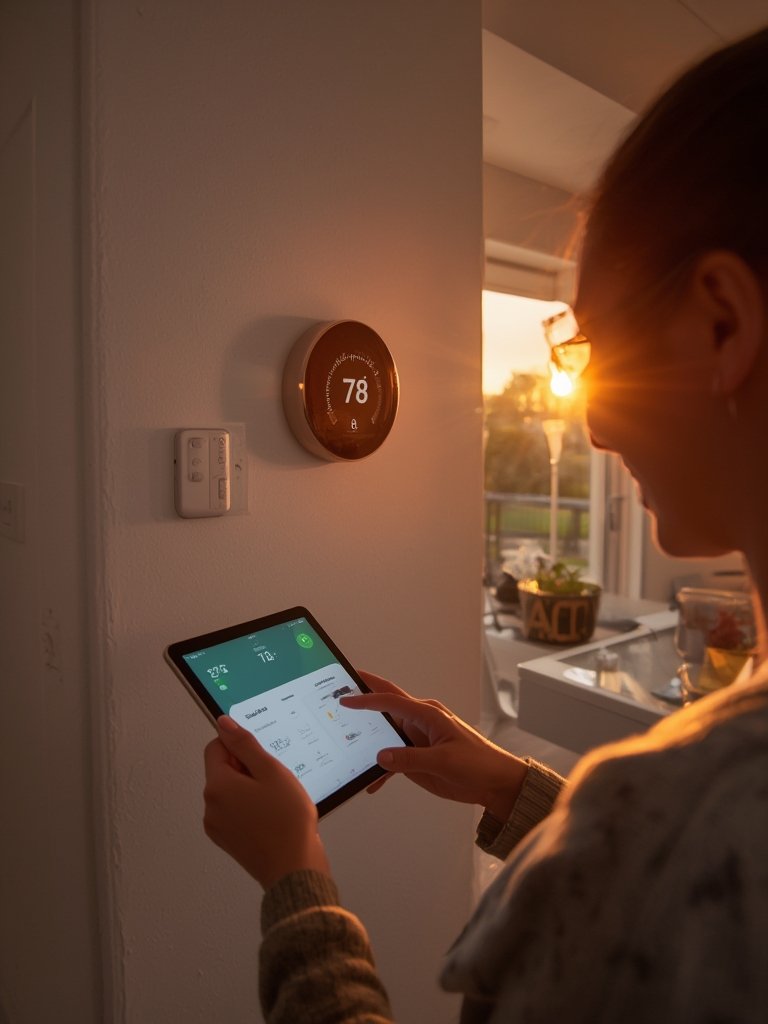
Real-world ROI worksheet—estimate your own savings
Calculating smart thermostat ROI starts with your last 12 months’ electric bills and TOU rates. Here’s how to estimate your actual payback:
- Find your average monthly bill over the last 6–12 months.
- Calculate peak vs. off-peak rate differential (e.g., $0.45 vs. $0.16 per kWh).
- Estimate how much of your electric use can shift to off-peak—most AI thermostats cut cooling costs 15-24% in TOU markets.
- Divide the cost of the thermostat (e.g., $200) by your estimated annual savings to see payback in years.
- Factor in any rebates or incentive programs (often $50–$150 per unit from utilities or local governments).
Example:
Suppose your summer monthly bill is $220, peak TOU adds $0.20/kWh surcharge, and you expect 15% savings on cooling (assume $100 is A/C portion per month for 4 peak months):
- 4x$100 A/C months = $400 summer cooling
- 15% smart thermostat savings = $60/year
- $200 premium model, minus $100 rebate = $100 net
- Payback: $100 / $60 savings = 1.7 years
Actual payback will be longer in mild climates or on flat-rate plans, but often a smart thermostat delivers higher ROI than most other connected-home devices. Nearly 40 million U.S. homes are making this upgrade by 2026 (Intertek), and utility incentive programs remain a major driver.
For a device-specific rebate eligibility check, review your local utility’s qualified products or see contractor pricing tips in our contractor guide.
Installation and setup checklist for accurate electricity price sync
- Check your HVAC wiring for a C-wire or plan for an adapter if needed.
- Confirm your router’s dual-band Wi-Fi or Matter support—upgrade if necessary for stable mesh communications.
- Sign up with your electricity provider (or input TOU rates manually into the thermostat app).
- Link any available utility or third-party integrations (such as Green Button XML or voice assistant routines).
- Install external temperature and occupancy sensors in main living zones, avoiding close proximity to vents or windows.
- Test connectivity for at least 24 hours with simulated price changes, ensuring schedule adapts as expected.
- Enable firmware auto-updates within the thermostat app for ongoing feature and security improvements.
- Review privacy controls and opt out of cloud data uploads if desired.
New 2026 releases vastly improved Wi-Fi dropouts and Matter/Thread bugs that plagued prior generations. Instant device hand-off and OTA updating are now table stakes—if your model doesn’t offer both, it’s not future-ready.
For more install troubleshooting or to verify mesh compatibility for all your smart home tech, check our Matter 2.0 how-to.
FAQs: AI energy saving thermostats in 2026
How does an AI energy saving thermostat in 2026 lower electric bills?
It syncs with your utility’s real-time or published rate schedule, automatically pre-cools or pre-heats your space during low-cost periods, then reduces system use during peak hours. This hands-free scheduling means less energy use during expensive time windows without sacrificing comfort.
What brands support real-time grid pricing or TOU sync?
Top models in 2026, including the Nest Learning Thermostat 4th Gen, Ecobee Essential, Honeywell Home XS2, and Meross Q2 2026, all support some form of price sync. Support varies by region and utility integration; check each product’s compatibility tool or your local utility’s site.
What happens if my Wi-Fi or mesh goes down?
Most smart thermostats revert to their last “known” schedule and temperature when offline. You won’t lose comfort, but you’ll temporarily miss price-triggered adjustments until connectivity is restored. For homes with unreliable networks, consider dual-band routers and regular connection checks.
Is smart thermostat ROI still good on a flat-rate utility plan?
ROI is lower in flat-rate markets, typically payback is 3 years or more—mainly from AI learning, scheduling, and occupancy-based setbacks, not price shifting. Homes with real TOU or demand charges see much faster payback of 1 to 2 years with AI thermostat upgrades.
Are there privacy risks with AI thermostat data?
AI models collect occupancy, schedule, and sometimes even geolocation data to optimize comfort and savings. All reviewed brands now offer local-only control modes or opt-out for cloud analytics. Review privacy settings at setup and periodically.