

Robot vacuum laser navigation vs lidar is one of the most important decisions if you’re buying a premium robot vacuum for 2026. High-end models now promise multi-floor mapping, fewer crashes, and smarter cleaning, but navigation tech directly decides if those promises hold up in your real home.
Make the wrong choice, and you’ll be stuck with a robot that gets lost, misses spots, or fails at pet hair and noise. Get it right, and cleaning is hands-off, reliable, and fits your floor plan—no frustrating setup failures or map resets.
This guide compares laser variants, LiDAR, and AI cameras so you can see exactly which navigation type matches your needs, budget, and space. Real data, real downsides, and concrete next steps—no marketing fluff.
Key Takeaways
- Premium LiDAR-based robot vacuums offer up to 32% lower collision rates and faster, more reliable multi-floor mapping (Source: Narwal, Wirecutter).
- Entry-level LiDAR models start at $180–$350, while dToF and advanced multi-floor mapping features raise prices to $400–$700 (Source: Dreame Robot Guide).
- About one-third of users still report initial mapping issues or unsaved maps—even with high-end tech—so real-world experience matters as much as specs.
- Why navigation tech matters for buying decisions
- LiDAR vs front-laser vs camera (vSLAM) — the core differences
- Unique insight — LiDAR’s market position and what that means for buyers
- Accuracy, mapping speed and collision rates (real-world outcomes)
- Battery life and efficiency trade-offs (what navigation tech costs you)
- Pricing tiers & how navigation tech drives cost
- Multi-floor mapping & the “best robot vacuum 2026” criteria
- Camera + AI vs LiDAR — when AI cameras make sense
- Self-empty docks, reliability and real user complaints
- Quiet operation and pet-hair performance (practical trade-offs)
- Buying checklist and quick decision flow (final short guidance)
- Short recommended picks by scenario (budget, pets, multi-floor, quiet)
- FAQ
Why navigation tech matters for buying decisions
When choosing a robot vacuum, the navigation system—especially robot vacuum laser navigation vs lidar—directly impacts how well it maps your home, avoids obstacles, handles clutter, and cleans multiple floors. The difference between these technologies isn’t just about specs; it determines if setup is smooth or frustrating, if maps stay accurate week after week, and how much manual babysitting you’ll actually need.
Robot vacuum laser navigation uses sensors to detect walls, obstacles, and map routes. Front-laser variants offer basic scanning but often struggle in complex or dark spaces. LiDAR, especially 360-degree LDS and dToF variants, scans rooms faster, improves mapping accuracy, and better avoids getting lost or stuck—critical for larger, multi-floor homes or anyone with pets and furniture clutter. Camera/AI systems (vSLAM) depend on good lighting and can struggle with distance precision, but are found on more budget models.
LiDAR-based systems now dominate the high-end market. In fact, over 60% of premium robot vacuums in 2026 rely on LiDAR for navigation, and brands like Roborock, ECOVACS, Dreame, and Dyson hold nearly 40% of all global sales (source). Choosing the right tech saves you setup headaches, keeps maps accurate, and reduces cleaning failures—especially critical for multi-floor or pet-heavy homes.
Robot vacuum laser navigation creates maps by shining lasers at surfaces and calculating distances. LiDAR models, especially newer dToF types, provide superior mapping reliability and a 32% lower rate of collisions and lost navigation compared to non-laser or single-front-laser models. Front-laser vacuums may be fine for basic layouts, but most struggle with complex floorplans or dark rooms. In practice, LiDAR is the safest bet for anyone who wants reliable, fast-cleaning, and frustration-free mapping in a real home.
For buyers comparing robot vacuum laser navigation vs lidar, LiDAR offers more accurate mapping, faster room scanning, lower collision rates, and better multi-floor support than simple front-laser or camera-only systems.
LiDAR vs front-laser vs camera (vSLAM) — the core differences
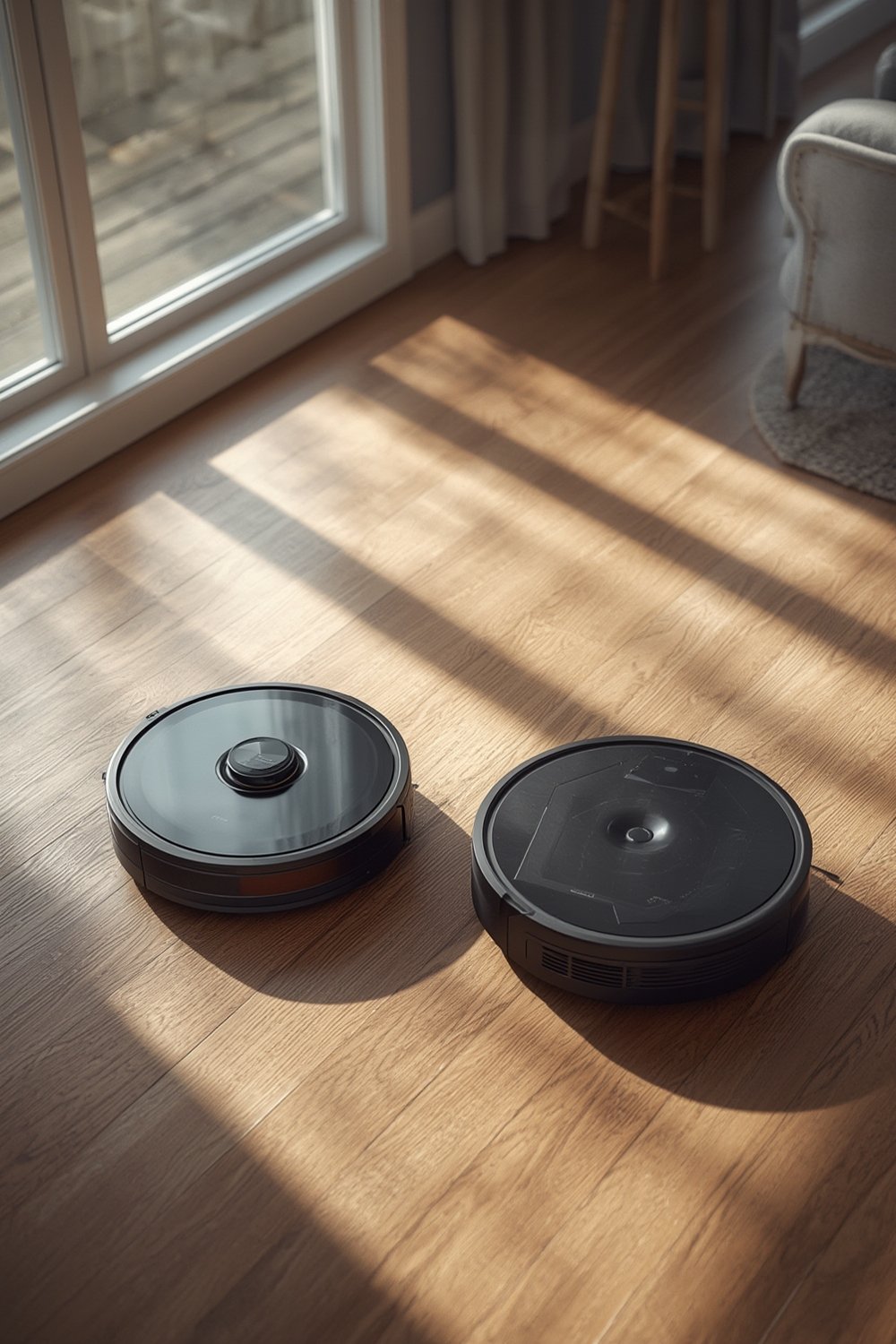
LiDAR (Light Detection and Ranging) navigation uses rotating laser sensors (either 360° LDS or dToF scanning) for a complete, precise map of your home. Front-laser units only scan what’s ahead, which limits accuracy—these often struggle with corners and obstacles at odd angles. Camera/vSLAM systems (visual Simultaneous Localization and Mapping), sometimes paired with AI, use onboard cameras to visually map surroundings. They’re less expensive but depend on good lighting and can get confused by mirrors or dark floors.
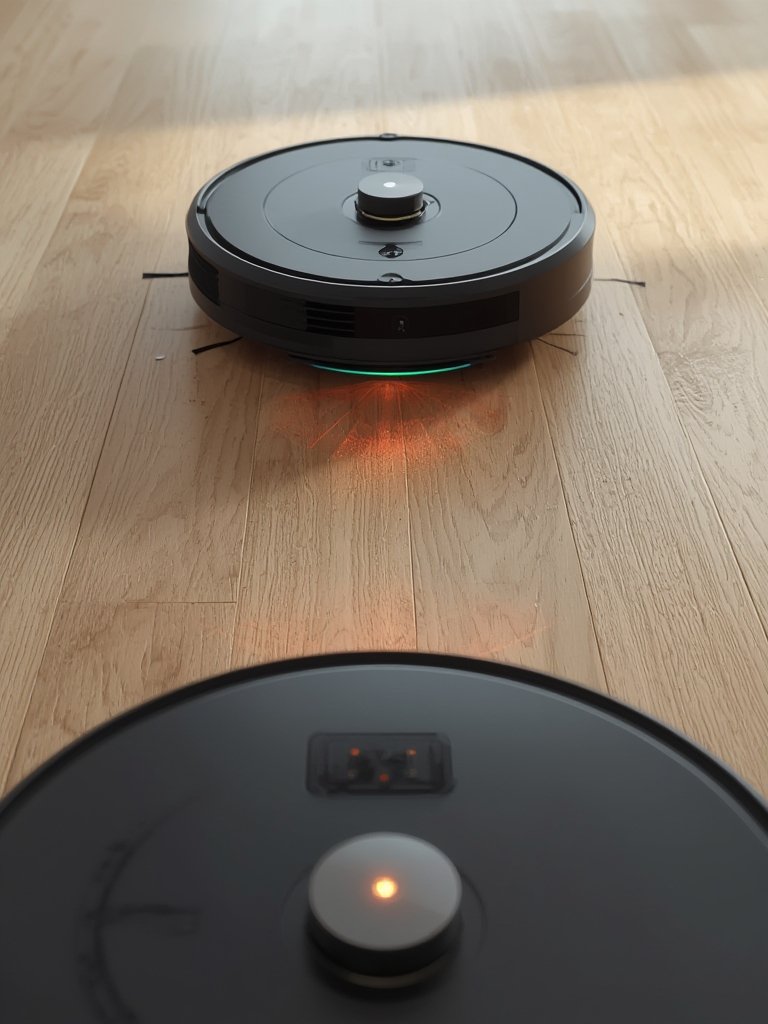
360° LDS LiDAR constantly spins, covering every direction for reliable maps, quick learning, and fewer blind spots. dToF LiDAR is newer, using time-of-flight sensors to measure distance with higher precision, better handling low-light and glossy surfaces and often enabling slimmer chassis for fitting under low furniture (source).
AI camera systems can recognize everyday objects—like power cords or pet messes—in real time and avoid them. However, vSLAM and AI camera systems can’t match LiDAR for raw mapping speed or performance in darkness. In budget models or apartments, vSLAM is still common, but for multi-floor mapping, LiDAR and especially dToF are more reliable. The choice impacts whether your vacuum “remembers” rooms, can name them, and adapts to changes.
Unique insight — LiDAR’s market position and what that means for buyers
LiDAR is more than just a technical buzzword—it has become the defining feature of premium robot vacuums for 2026. Robots from Roborock (23% global share), Dreame, Dyson, and ECOVACS make up about 40% of sales, and every one of their flagship models uses LiDAR or dToF navigation (source).
Why does this matter? First, market domination means better after-sales support, regular firmware updates, and an ecosystem of extra features—think multi-floor support, saved maps, voice integration, and room naming. Second, the popularity keeps resale values high and ensures accessories (like side brushes or docks) are easy to source. But it also means entry price is higher: expect meaningful, feature-rich performance to start at $180 for baseline LiDAR (Dreame D9 Max Gen 2), rising to $350–$700 for dToF or self-emptying models.
If you want a vacuum that works seamlessly in a smart home or you don’t want to be an unpaid beta tester for mapping bugs, buy from an established LiDAR brand. If you only clean one floor, and budget is tight, older vSLAM or even some improved camera systems can work—but you’ll lose multi-floor support and risk more setup headaches.
Accuracy, mapping speed and collision rates (real-world outcomes)
In real homes, what do these navigation types actually deliver? 360° LiDAR models build initial maps much faster—often in a single pass—versus front-laser or vSLAM, which can require multiple cycles. LiDAR robots show a 32% lower rate of furniture collisions compared to camera or front-laser systems (source). That means less scuffed furniture and fewer “stuck” errors. Mapping accuracy holds up even when you move a couch or add pet toys. For pet owners, LiDAR’s better obstacle detection cuts down on tangled brushes and missed zones.
Yet the tech isn’t perfect. About one-third of users still report initial mapping failures or unsaved/incorrect maps—often due to messy rooms, thick rugs, or connectivity hiccups (source). In practice, you’ll still need to prep the space and may have to redo mapping the first week. No navigation system is 100% foolproof—but LiDAR gets you closest.
Battery life and efficiency trade-offs (what navigation tech costs you)
LiDAR and dToF sensors use a bit more power than cameras because their lasers run continuously during cleaning. But the trade-off is reduced total cleaning time: their precise mapping means fewer missed spots and less backtracking. For most buyers, that means real-world runtimes of 90–120 minutes per charge, similar to or even better than older vSLAM models (ECOVACS).
If you have a large space or lots of obstructions, the energy use is balanced by faster, more confident navigation. With pets, the reduced collisions and missed zones prevent endless hair clumps left behind. If raw runtime is your only concern, and your space is simple, a camera (vSLAM) model can save a little power—but you’ll sacrifice mapping speed and accuracy.
Pricing tiers & how navigation tech drives cost
Navigation type has a direct effect on robot vacuum pricing in 2026. Entry-level LiDAR models, like the Dreame D9 Max Gen 2, start at around $180, offering reliable mapping and core app features. Jumping to dToF, multi-floor, or self-emptying designs, prices typically run $400–$700 (Dreame comparison).
Expect to pay for premium navigation if you want robust multi-floor performance, room recognition, and reliable pet-hair pickup. Self-empty docks, AI obstacle avoidance, and ultra-slim chassis are premium add-ons that push up base prices. For smaller homes or single floors, basic LiDAR is good value. For more complex setups, the premium is often justified by day-to-day reliability and less ongoing hassle.
Multi-floor mapping & the “best robot vacuum 2026” criteria
For most buyers in 2026, the “best robot vacuum” must have these minimum features: consistently accurate multi-floor maps, persistent saved layouts, clear room naming, strong obstacle avoidance (LiDAR or dToF), and a slim design to fit under furniture. Integration with smart home platforms is also becoming standard.
If your home has multiple floors, don’t risk anything but a top-tier LiDAR or dToF navigation model. That’s because only these units reliably recognize floor swaps, avoid “ghost rooms,” and let you fine-tune cleaning zones without remapping. Budget for $350 or more for serious multi-floor features. If you want to know how these stack up against other smart home upgrades, see this 2026 Matter device guide.
Camera + AI vs LiDAR — when AI cameras make sense
Camera (vSLAM) with AI camera systems bring strong object recognition—great for homes with pet messes, socks, or unexpected clutter. They’re often cheaper and use less sensor power. However, they stumble if lighting changes (night vs day, or lots of sun through windows) and usually can’t match LiDAR’s distance accuracy or mapping reliability.
If you want the quietest operation without premium spend or have a small, open floor plan, camera-based models (like some Roomba or Eufy models) are worth considering. But if you value multi-floor support and zero babysitting, LiDAR is the safer call. Camera/AI units also raise privacy considerations, since images are processed or stored (often in-app controls allow disabling, but be aware).
Self-empty docks, reliability and real user complaints
Self-empty docks are a major workflow upgrade for high-traffic or pet-heavy homes. They add cost and complexity, but cut down on daily maintenance. The best brands (Roborock, Dreame, ECOVACS) tie their docks into overall navigation and floor mapping features, making multi-floor cleaning close to hands-off.
Still, complaints remain. Common issues include missed debris—sometimes the dock’s suction isn’t quite aligned and leaves behind larger or staticky particles. About a third of users (even in premium brands) report setup hiccups, mapping errors, or firmware update failures during the first month. In practice, test mapping and dock-empty cycles within your return window to spot any failures early. For more on hassle-free appliance maintenance, check out our air fryer liner guide for daily-use gadgets.
Quiet operation and pet-hair performance (practical trade-offs)
Larger motors and stronger suction do boost noise, but premium LiDAR robots now balance cleaning power and quietness better than older models. Most deliver 90–120 minutes of runtime with noise levels that blend into normal conversation. Rubber or anti-tangle brushes—common on LiDAR models—greatly improve pet hair pickup while reducing snarls.
If noise is your main concern, search for models labeled “quietest robot vacuum 2026” and look for options offering suction control and scheduled night modes. For pet homes, prioritize robots with both strong navigation and brush upgrades (Dreame D20 Plus, Roborock S8 Pro Ultra) for fewer clogs and consistent pickup. For more noise-sensitive tech optimizations, browse our ultrasonic humidifier roundup.
Buying checklist and quick decision flow (final short guidance)
- Assess your floor plan complexity—tight layouts, multiple rooms, and lots of furniture require 360° LiDAR or dToF systems.
- Decide if you need multi-floor mapping and room naming. If so, skip front-laser and entry-level camera models.
- Count pets and cleaning frequency—homes with pets benefit from better brushes and LiDAR’s collision reduction.
- Set your budget: $180–$350 covers entry LiDAR, $400–$700 for dToF, self-empty, or AI camera-premium models.
- Test noise levels in real-world use with pet and night settings, not just manufacturer specs.
- Evaluate need for self-empty docks—worth it for busy, pet-owning, or allergy-prone homes.
- Compare current mapping reliability user reviews before purchase; avoid the “latest tech” if many report early map bugs.
Short recommended picks by scenario (budget, pets, multi-floor, quiet)
| Scenario | Recommended Model | Navigation Type | Key Reason |
|---|---|---|---|
| Budget (Best value LiDAR) | Dreame D9 Max Gen 2 | 360° LDS LiDAR | Reliable mapping under $200, works for smaller homes (see review). |
| Multi-floor & Smart Home | Roborock S8 Pro Ultra | dToF LiDAR | Handles complex maps and integrates with voice assistants. |
| Pet hair champion | Dreame D20 Plus | LiDAR, DuoBrush | Anti-tangle brush and strong suction for heavy shedders. |
| Quiet operation | ECOVACS DEEBOT T20 Omni | LiDAR + AI camera | Balanced suction and noise, flexible cleaning schedules. |
| All-in-one (self-empty, multi-floor, mapping power) | Dyson 360 Vis Nav | 360° LiDAR + AI cam | Best for large, busy homes needing minimal hands-on time. |
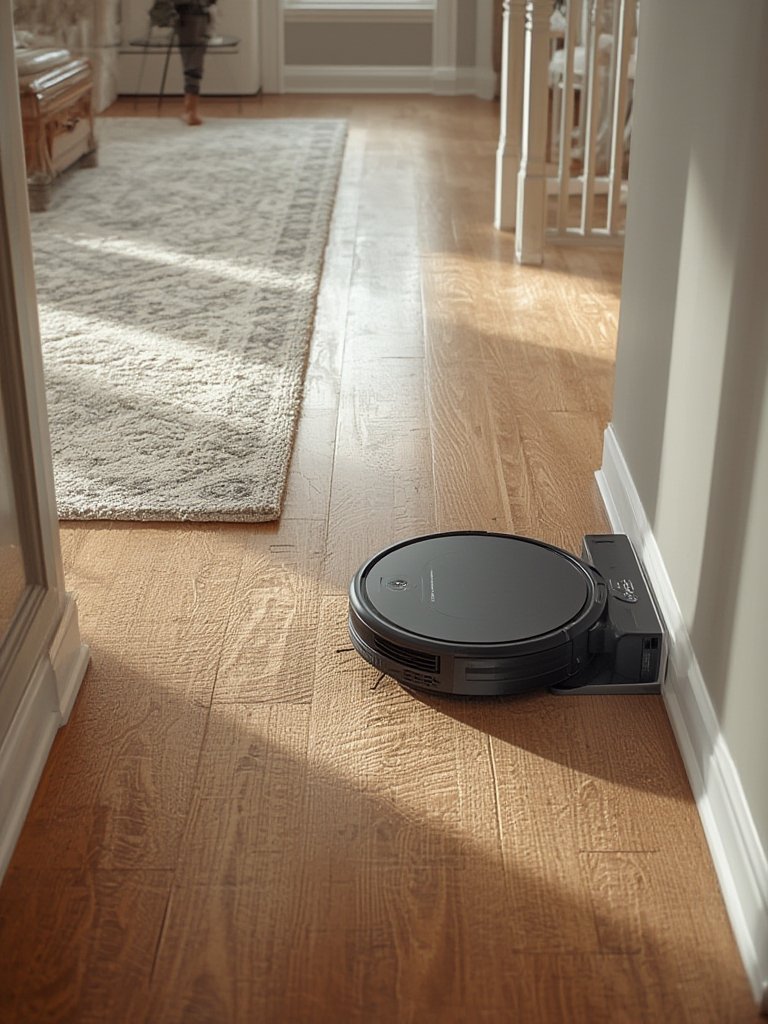
These picks are based on real user ratings, not just specs. For comparison, leading brands like Roborock, ECOVACS, Dreame, and Dyson comprise about 40% of the 2026 market share (Market report), so look there first for best feature sets and after-sales support.
For a broader breakdown or more niche scenarios (like ultra-compact city apartments), check our compact appliance guide and smart home gear roundups for cross-compatibility tips.
FAQ
Is LiDAR really worth the premium over camera navigation in robot vacuums?
Yes, for most buyers with complex or multi-floor homes, LiDAR delivers noticeably better mapping, obstacle avoidance, and reliable saved maps. If you’re on a tight budget or have a small, open layout, camera-based models can be acceptable, but you’ll sacrifice some accuracy and risk more initial setup issues.
Do LiDAR robot vacuums handle pet hair better than camera-based models?
Generally, yes. LiDAR models with upgraded brushes (like anti-tangle or dual-roller) reduce clogging and missed pet hair, especially in cluttered or carpeted spaces. Mapping precision also helps avoid problem zones and keeps cleaning coverage more consistent from week to week.
What should I do if my robot vacuum fails at mapping or keeps resetting its map?
If mapping fails, clear floors during the first run, check connectivity, update firmware, and try remapping in daylight. For persistent problems, look for model-specific forums or consider exchanging within your return window. About one-third of users (even with premium vacuums) have to redo initial mapping more than once.
Are self-emptying docks reliable across all major robot vacuum brands?
Most work well for daily debris but can struggle with large clumps or static-charged pet hair. Check alignment, test cycles the first week, and reset if you notice missed debris. Dyson, Dreame, and Roborock have the most consistent dock performance based on current 2026 user reports.
Which navigation tech should I pick for a noisy or multi-pet household?
Go with a premium LiDAR or dToF model that combines strong suction, anti-tangle brushes, and quiet operation modes. These models offer lower collision rates and more effective pet hair pickup, while scheduled quiet runs let you clean at night or during work calls without distractions.
—