

Candle lamp warmer solutions are changing how people enjoy candles at home—but are they really safer, more effective, and worth the price? This guide unpacks what actually matters when buying and using a candle lamp warmer, based on 2024 research, recent recalls, and hard data.
Key Takeaways
- Candle lamp warmers sidestep open-flame fire risks but can have electrical dangers if built poorly—real product recalls prove it.
- The right bulb and proper setup make all the difference for scent throw, longevity, and safe use.
- Maintenance and compatibility are often missed but critical—especially checking insulation, fuse quality, and matching the correct bulb.
- Candle Lamp Warmers: What They Are and Why They Matter
- How to Use a Candle Lamp Warmer: Step-by-Step Setup and Safety
- The Real Risks, User Complaints, and Comparison—What You Need to Know
- Conclusion
- FAQ
Candle Lamp Warmers: What They Are and Why They Matter
Candle lamp warmers use a top-down halogen bulb (not flame) to melt scented candle wax, releasing fragrance evenly without burning the wick. The promise: more scent, less mess, and less danger compared to traditional burning. This method aims to prevent smoke staining, soot, and open-flame fire hazards—issues common in homes with pets, kids, or those who want to leave candles unattended.

Unlike old plug-in wax melters, modern candle lamp warmers are styled like desk lamps. They let you use the jar candles you already own. Top-rated models melt wax from above, ensuring an even, steady release of scent without burning up the wax itself—so your favorite candle lasts longer.
However, not all models are equally safe or effective. Recent recalls, including the YUDOTECH CWL233-3 and generic models sold online, show that poor electrical safety and missing insulation can actually create fire and shock hazards (source). So, knowing what features and certifications to look for is essential.
How to Use a Candle Lamp Warmer: Step-by-Step Setup and Safety
- Choose the right spot: Place your candle lamp warmer on a stable, flat surface away from drapes, bedding, and children or pets. Never use near water or damp locations.
- Check the documentation: Make sure your unit has a CE mark, proper fuse, user manual, and verified insulation. If your product lacks these, consider returning or replacing it (see recall list).
- Install the correct bulb: Use only the bulb type and wattage specified in your lamp’s manual. For most models, this means a standard halogen GU10 bulb, generally 35W or 50W (check your manufacturer’s specs).
- Place your candle: Use container candles only. Position your candle directly under the bulb, with the wax surface 3 to 6 inches below the heat source.
- Set timer or heat level: Start with a medium setting. Monitor initial melting to find your ideal scent throw—adjust as needed.
- Never leave on unattended: Always turn off the lamp when leaving the room or going to bed.
- Routine checks: Every month, check the wiring, insulation, and fuse if accessible. Clean away wax residue from the lamp or shade.
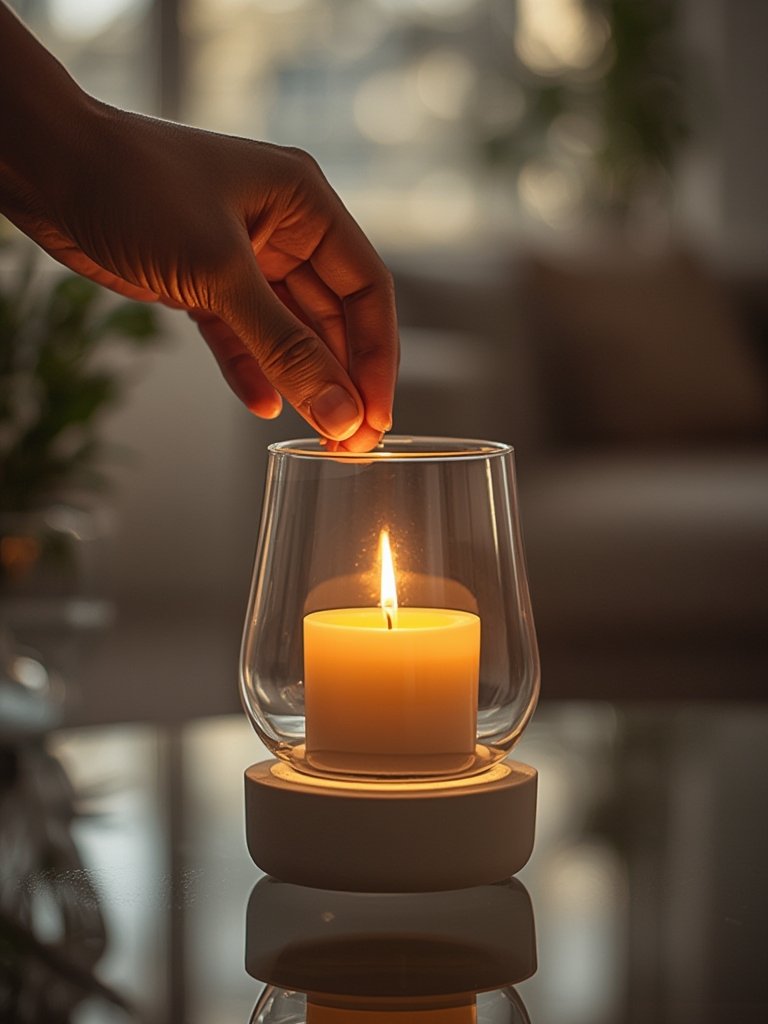
If you want to minimize the mess and lengthen how long your candle lasts, consider using a disposable air fryer liner under your jar for easy spill and drip cleanup.
For small apartments or dorm rooms, you might also want to check out air fryers for dorm and small-space living for multi-functional counter-space saving tips.
The Real Risks, User Complaints, and Comparison—What You Need to Know
Despite being promoted as “safer,” candle lamp warmers can be hazardous if poorly designed. Here’s an honest look at real problems and how they stack up to burning candles.
Safety and Recalls: Not All Warmers Are Equal
Between late 2023 and 2024, several warmer models faced recalls for lack of insulation, inadequate fusing, and missing safety documentation—violating EU and UK safety regulations (UK government recall notice). Unlike open flames, warmers introduce electrical hazards such as faulty wiring, short circuits, and ungrounded metal parts.
| Aspect | Candle Lamp Warmer | Traditional Candle |
|---|---|---|
| Primary Hazard | Electrical shock, fire from poor insulation | Open-flame fire, burns, smoke/soot |
| Main Benefit | No open flame, longer scent duration | Traditional ambiance, no devices needed |
| Cost | $20-$50 upfront, plus bulbs | Just the candle (replaced more often) |
| Maintenance | Bulb and fuse checks; clean wax spills | Trim wick, watch for drafts |
| Effectiveness | Greater scent throw with correct settings | Shorter burn time, less consistent scent |
Most Common Complaints from Real Users
- Poor scent throw: Usually due to setting the power too low or using the wrong bulb (see user experience breakdown).
- Electric hazard fears: Several units recalled after reports of high temperature, shock risk, or melting fixtures.
- Missing documentation: No CE mark, user guide, or fuse details—often seen in cheaper Amazon imports and direct-from-China models.
- Maintenance hassle: Replacing bulbs is not always easy; some units require hard-to-find replacement bulbs.
Get more tips in our appliance maintenance guide for home devices.
Effectiveness: Scent Throw and Air Quality Analysis
With proper setup, candle lamp warmers can outperform burning for fragrance release and longevity. The wax gets used up far slower because it’s not burned—just melted and refrozen. That means more hours per candle jar and less soot on your walls (detailed breakdown here).
But, a new 2025 American Chemical Society study notes that scented wax melts and combustion candles release a similar number of nanoparticles into the air under normal room use—often a result of the volatile organic compounds (VOCs) in fragrance oils and their breakdown in heat or by ozone. So, ventilation still matters.
If you’re upgrading multiple devices, check out our HEPA air purifier for bedroom guide to catch particles produced by candles or warmers.
Hidden Costs and Overlooked Details
- Bulb replacements are not always cheap—factor in annual cost for specialty bulbs.
- Energy use isn’t huge, but not zero—operating for hours each day adds a few dollars monthly to your bill.
- Most guides skip key details about bulb compatibility, fuse maintenance, and energy use. High-wattage bulbs give better scent throw but raise fire risk if not designed for your model.
- Units designed for easy bulb access pay off long-term in safety and cost savings. For more space and maintenance hacks, see our multi cooker buying guide.
Conclusion
Candle lamp warmers can add fragrance, safety, and efficiency to home scent routines—but only when you buy quality products, match the right bulb, and perform regular checks for electrical safety. The latest incident data highlights that shortcuts on insulation or fuse protection put your home at risk. For families, renters, and fragrance fans, upgrading to a compliant candle lamp warmer can be a smart move, but don’t skip the homework. Ready to make your space safer and better smelling? Review product recalls, then pick a certified model and always follow the manufacturer’s instructions.
For more tips on smarter small-space appliances, visit our guides on portable air fryers and air fryer liners.
FAQ
Are candle lamp warmers really safer than burning candles?
They eliminate open flames, so they’re safer in terms of fire and burns. However, electrical safety is key—recent recalls show that poor wiring or fuse failures can pose shock and fire risks. Only buy units with third-party safety certification, and follow the manual.
Which bulbs are compatible, and does the wattage matter?
Most models specify a halogen GU10 bulb—commonly 35W or 50W. Never exceed the listed wattage; a hotter bulb can cause overheating and increase fire risk. Always check your lamp’s documentation or the manufacturer’s website before replacing bulbs.
Does a candle lamp warmer make my candle last longer?
Yes. Because the wax is melted, not burned, a candle warmer can stretch a candle jar’s life for dozens more hours compared to burning it. You’ll replace candles less often, but will eventually need replacement bulbs.
Why is my candle warmer not releasing much scent?
This usually means the bulb is too low-powered, the candle is too far from the bulb, or you’ve set the power too low. Try switching to a stronger, compatible bulb and double-check that your candle is positioned as the instructions say.
Do candle warmers use a lot of energy?
No—they use similar power to a regular halogen desk lamp. But hours of daily use can add up over a month. If energy cost is a concern, run your warmer only when needed, and always switch off when not in use.